



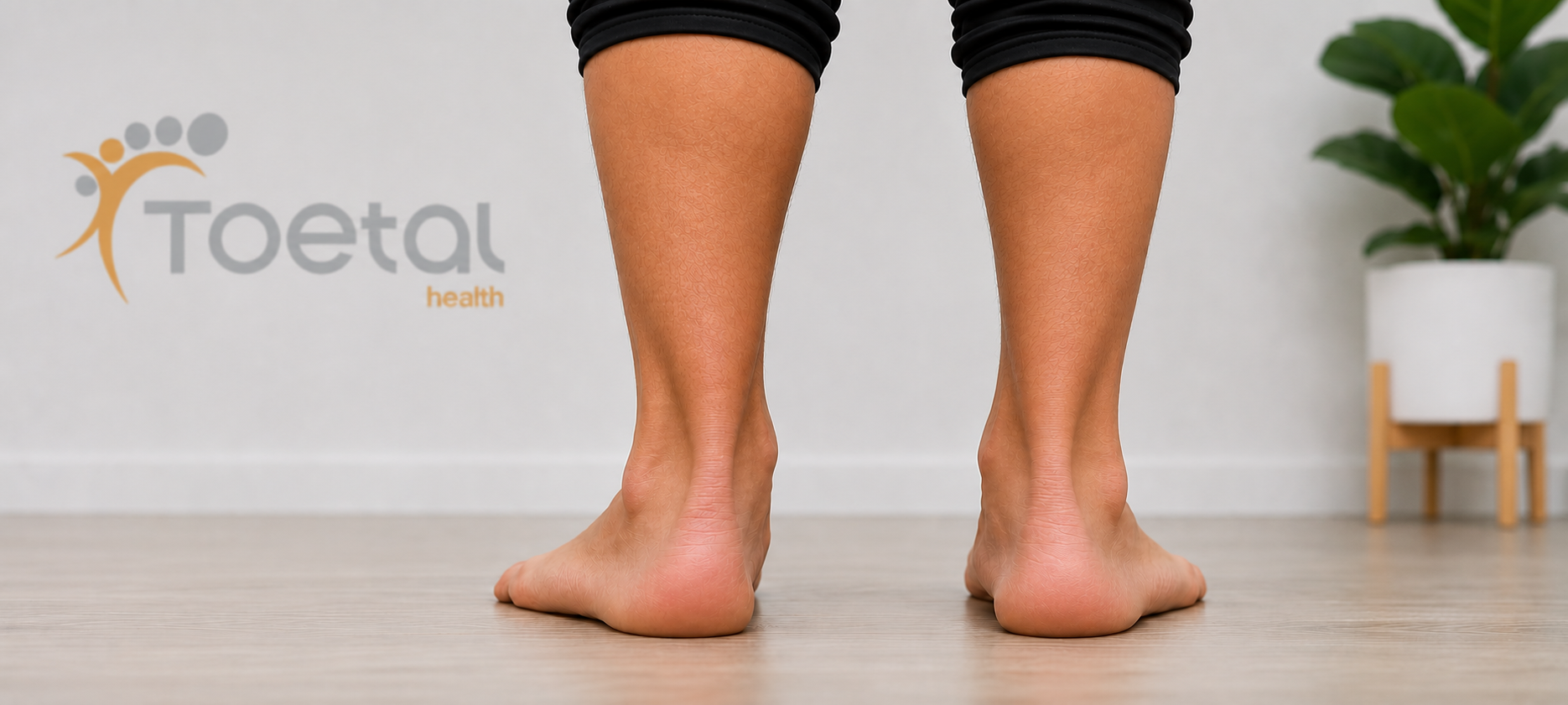
Flat feet, also known as fallen arches, are one of the most common foot conditions seen by podiatrists. While many people with flat feet experience no problems at all, others develop pain because their feet aren't providing enough support during walking, running or standing.
When the arch collapses or rolls inward excessively, the foot can become less efficient at absorbing and distributing forces. Over time, this can place additional strain on the muscles, tendons, ligaments and joints throughout the feet and lower limbs.
At Toetal Health, we assess not only the shape of your feet but also how they function. Every person's feet are different, and treatment should always be based on symptoms and movement rather than simply whether an arch appears low.
When the arch collapses or rolls inward excessively, the foot can become less efficient at absorbing and distributing forces. Over time, this can place additional strain on the muscles, tendons, ligaments and joints throughout the feet and lower limbs.
At Toetal Health, we assess not only the shape of your feet but also how they function. Every person's feet are different, and treatment should always be based on symptoms and movement rather than simply whether an arch appears low.
What Are Flat Feet?
A flat foot occurs when the arch on the inside of the foot is lower than expected or disappears when standing. This often causes the foot to roll inward, a movement known as overpronation.
Many people are born with naturally flatter feet, while others develop flatter arches gradually due to age, injury, pregnancy, weight changes or weakening of the supporting tendons.
Importantly, not all flat feet require treatment. Many people have flat arches without pain and function perfectly well. Treatment is generally recommended when the flat foot contributes to discomfort, reduced function or an increased risk of injury.
Many people are born with naturally flatter feet, while others develop flatter arches gradually due to age, injury, pregnancy, weight changes or weakening of the supporting tendons.
Importantly, not all flat feet require treatment. Many people have flat arches without pain and function perfectly well. Treatment is generally recommended when the flat foot contributes to discomfort, reduced function or an increased risk of injury.
What Symptoms Can Flat Feet Cause?
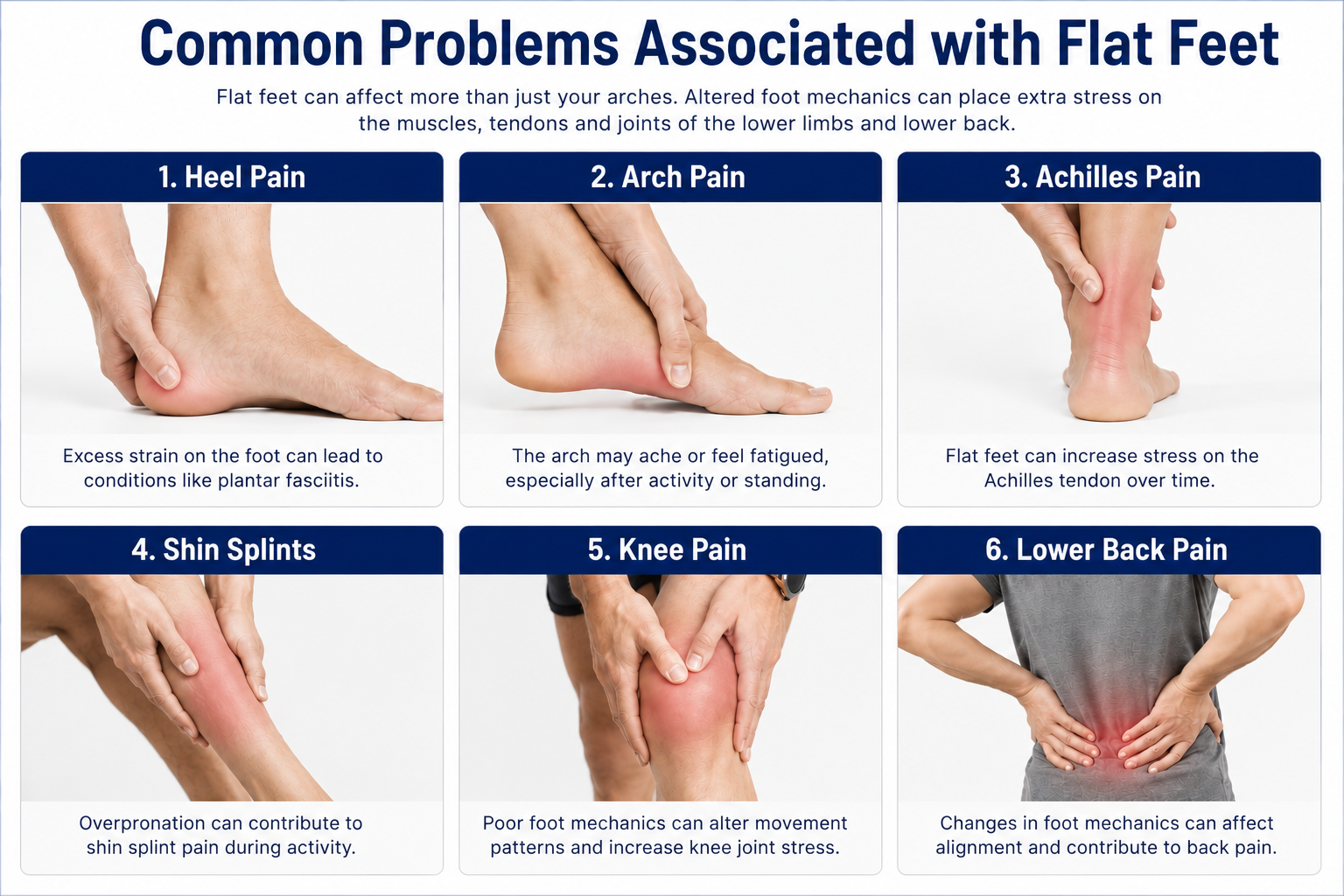
Flat feet can affect much more than just the arch itself. Because the foot acts as the foundation of the body, altered foot mechanics can influence the ankles, knees, hips and lower back.
Symptoms may include:
Arch pain
Heel pain
Ankle pain or instability
Shin splints
Achilles tendon pain
Pain beneath the ball of the foot
Tired or aching feet after standing
Knee pain
Hip discomfort
Lower back pain
Frequent sporting injuries
Difficulty finding comfortable footwear
Symptoms often become more noticeable after long periods of standing, walking or exercise.
Symptoms may include:
Arch pain
Heel pain
Ankle pain or instability
Shin splints
Achilles tendon pain
Pain beneath the ball of the foot
Tired or aching feet after standing
Knee pain
Hip discomfort
Lower back pain
Frequent sporting injuries
Difficulty finding comfortable footwear
Symptoms often become more noticeable after long periods of standing, walking or exercise.
What Causes Flat Feet?
There isn't a single cause of flat feet. Some people simply inherit their foot shape, while others develop fallen arches over time.
Common causes include:
Genetics
Ligament laxity (hypermobility)
Weakening of the posterior tibial tendon
Pregnancy
Age-related changes
Previous foot or ankle injuries
Arthritis
Obesity
Certain neurological conditions
Understanding the underlying cause helps determine the most appropriate treatment.
Common causes include:
Genetics
Ligament laxity (hypermobility)
Weakening of the posterior tibial tendon
Pregnancy
Age-related changes
Previous foot or ankle injuries
Arthritis
Obesity
Certain neurological conditions
Understanding the underlying cause helps determine the most appropriate treatment.
Children's Flat Feet
One of the most common concerns parents have is whether their child's flat feet need treatment.
In many children, flat feet are completely normal. The arch often develops naturally throughout childhood as muscles strengthen and coordination improves.
However, an assessment may be worthwhile if your child experiences:
Foot or leg pain
Frequent tripping
Difficulty keeping up with other children
Shoes wearing unevenly
Significant in-toeing or out-toeing
One foot appearing different from the other
Walking on the inside of the feet excessively
Our podiatrists can determine whether your child's foot posture is developing normally or whether treatment may improve comfort and function.
In many children, flat feet are completely normal. The arch often develops naturally throughout childhood as muscles strengthen and coordination improves.
However, an assessment may be worthwhile if your child experiences:
Foot or leg pain
Frequent tripping
Difficulty keeping up with other children
Shoes wearing unevenly
Significant in-toeing or out-toeing
One foot appearing different from the other
Walking on the inside of the feet excessively
Our podiatrists can determine whether your child's foot posture is developing normally or whether treatment may improve comfort and function.
How Are Flat Feet Diagnosed?
Your appointment begins with a comprehensive biomechanical assessment.
Rather than simply looking at your feet while standing, we evaluate how your feet move during walking, how your muscles function and whether your foot posture is contributing to your symptoms.
Your assessment may include:
Medical history
Foot posture assessment
Walking and gait analysis
Joint mobility testing
Muscle strength assessment
Footwear assessment
Identification of contributing factors elsewhere in the lower limb
This allows us to develop a treatment plan specific to your condition and lifestyle.
Rather than simply looking at your feet while standing, we evaluate how your feet move during walking, how your muscles function and whether your foot posture is contributing to your symptoms.
Your assessment may include:
Medical history
Foot posture assessment
Walking and gait analysis
Joint mobility testing
Muscle strength assessment
Footwear assessment
Identification of contributing factors elsewhere in the lower limb
This allows us to develop a treatment plan specific to your condition and lifestyle.
Treatment for Flat Feet
Treatment depends on your symptoms, activity level and the underlying cause of your flat feet.
Your personalised treatment plan may include:
Education about your condition
Footwear advice
Strengthening exercises
Stretching programs
Activity modification
Custom foot orthoticsTemporary taping
Bracing where appropriate
Management of associated tendon injuries
Referral for imaging if required
Many people experience significant improvements with conservative treatment and never require surgery.
Your personalised treatment plan may include:
Education about your condition
Footwear advice
Strengthening exercises
Stretching programs
Activity modification
Custom foot orthoticsTemporary taping
Bracing where appropriate
Management of associated tendon injuries
Referral for imaging if required
Many people experience significant improvements with conservative treatment and never require surgery.
Do I Need Orthotics?
Not everyone with flat feet requires orthotics.
Custom orthotics are designed to support and improve the function of the foot when excessive movement is contributing to pain or injury. They work by redistributing pressure, improving alignment and reducing stress on irritated tissues.
If orthotics are appropriate for your condition, we will explain the expected benefits and whether they are likely to help your specific symptoms.
Our goal is always to provide the simplest and most effective treatment—not every patient leaves needing orthotics.
Custom orthotics are designed to support and improve the function of the foot when excessive movement is contributing to pain or injury. They work by redistributing pressure, improving alignment and reducing stress on irritated tissues.
If orthotics are appropriate for your condition, we will explain the expected benefits and whether they are likely to help your specific symptoms.
Our goal is always to provide the simplest and most effective treatment—not every patient leaves needing orthotics.
When Should You See a Podiatrist?
It is worth seeking an assessment if:
Your feet regularly ache after activity
You experience persistent heel or arch pain
Your ankles frequently roll inward
Running or sport causes repeated injuries
You notice worsening foot posture
One foot is becoming flatter than the other
Your child complains of foot pain
You are unsure whether your flat feet are contributing to other joint pain
Early assessment often prevents minor problems from becoming long-term injuries.
Your feet regularly ache after activity
You experience persistent heel or arch pain
Your ankles frequently roll inward
Running or sport causes repeated injuries
You notice worsening foot posture
One foot is becoming flatter than the other
Your child complains of foot pain
You are unsure whether your flat feet are contributing to other joint pain
Early assessment often prevents minor problems from becoming long-term injuries.
Why Choose Toetal Health?
At Toetal Health, we understand that no two flat feet are the same.
Rather than focusing solely on the appearance of your arches, we assess how your entire lower limb functions to identify the true cause of your symptoms. Every treatment plan is tailored to your goals, whether that's reducing pain, returning to sport, standing comfortably at work or improving your child's mobility.
Our evidence-informed approach combines thorough assessment, clear explanations and personalised treatment to help you move with greater comfort and confidence.
Rather than focusing solely on the appearance of your arches, we assess how your entire lower limb functions to identify the true cause of your symptoms. Every treatment plan is tailored to your goals, whether that's reducing pain, returning to sport, standing comfortably at work or improving your child's mobility.
Our evidence-informed approach combines thorough assessment, clear explanations and personalised treatment to help you move with greater comfort and confidence.
Frequently Asked Questions
Are flat feet bad?
Not necessarily. Many people have flat feet without experiencing any pain or limitations. Treatment is only recommended when flat feet contribute to symptoms or increase the risk of injury.
Can flat feet cause knee or back pain?
They can. Changes in foot mechanics may alter the way forces travel through the ankles, knees, hips and lower back. However, not all knee or back pain originates from the feet, which is why a comprehensive assessment is important.
Can flat feet be fixed?
In adults, the shape of the arch usually cannot be permanently changed without surgery. However, symptoms can often be managed very successfully with appropriate footwear, strengthening exercises and, where indicated, custom orthotics.
Do children grow out of flat feet?
Many children naturally develop stronger arches as they grow. Treatment is usually only required if the flat feet are painful, significantly affecting function or associated with another condition.
Are custom orthotics always necessary?
No. Orthotics are one treatment option and are only recommended when they are likely to provide meaningful benefit. Many patients improve with footwear advice, strengthening exercises and activity modification alone.
Why People Choose Toetal Health

Book Your Flat Feet Assessment Today
If you're experiencing foot pain, aching arches, recurring injuries or simply want to understand whether your flat feet are contributing to your symptoms, our experienced podiatrists can help. Call us on: (02) 9059 8296 or book an appointment below.
Book an AppointmentRecent Articles
Coming soon