



Fungal nail infections are one of the most common reasons people notice their toenails becoming thickened, yellow, brittle or difficult to cut. Although the condition is rarely dangerous, it can gradually worsen over time and often becomes increasingly difficult to manage if left untreated.
Many people are surprised to learn that not every thick or discoloured nail is caused by fungus. Previous injuries, psoriasis, repeated pressure from footwear and other nail disorders can all produce a similar appearance. Before investing months into treatment, it's important to establish the correct diagnosis.
At Toetal Health, we assess the appearance of your nails, discuss your medical history and recommend the most appropriate treatment plan for your individual situation. Depending on your needs, this may include professional nail reduction, topical therapies, referral for prescription medication or ToeFX fungal nail treatment.
Whether your goal is reducing discomfort, improving the appearance of your nails or preventing the infection from spreading, we'll work with you to develop a realistic treatment plan.
Many people are surprised to learn that not every thick or discoloured nail is caused by fungus. Previous injuries, psoriasis, repeated pressure from footwear and other nail disorders can all produce a similar appearance. Before investing months into treatment, it's important to establish the correct diagnosis.
At Toetal Health, we assess the appearance of your nails, discuss your medical history and recommend the most appropriate treatment plan for your individual situation. Depending on your needs, this may include professional nail reduction, topical therapies, referral for prescription medication or ToeFX fungal nail treatment.
Whether your goal is reducing discomfort, improving the appearance of your nails or preventing the infection from spreading, we'll work with you to develop a realistic treatment plan.
What is a fungal nail infection?
A fungal nail infection, medically known as onychomycosis, occurs when microscopic fungi invade the nail plate or the tissue beneath the nail. These fungi feed on keratin—the protein that gives nails their strength—and gradually alter the structure of the nail as they grow.
Unlike a skin infection, which may develop over a matter of days, fungal nail infections usually progress very slowly. Early changes can be subtle, with only a small patch of yellow or white discolouration appearing near the tip or edge of the nail. As the infection becomes more established, the nail may thicken, become brittle or begin lifting away from the nail bed.
Because toenails grow slowly, fungal infections often persist for many months or even years before people seek treatment. It's also common for patients to mistake the problem for normal ageing or damage caused by footwear, allowing the infection to continue spreading unnoticed.
One of the biggest misconceptions is that fungal nail infections are simply a cosmetic issue. While appearance is often the first concern, thickened nails can become uncomfortable inside shoes, difficult to trim safely and may increase pressure on surrounding toes. In some people—particularly those with diabetes or reduced circulation—damaged nails may also increase the risk of skin injury or secondary infection.Although fungal nail infections rarely disappear without treatment, there are a number of effective management options available. The first step is ensuring that fungus is actually the cause of the nail changes.
Unlike a skin infection, which may develop over a matter of days, fungal nail infections usually progress very slowly. Early changes can be subtle, with only a small patch of yellow or white discolouration appearing near the tip or edge of the nail. As the infection becomes more established, the nail may thicken, become brittle or begin lifting away from the nail bed.
Because toenails grow slowly, fungal infections often persist for many months or even years before people seek treatment. It's also common for patients to mistake the problem for normal ageing or damage caused by footwear, allowing the infection to continue spreading unnoticed.
One of the biggest misconceptions is that fungal nail infections are simply a cosmetic issue. While appearance is often the first concern, thickened nails can become uncomfortable inside shoes, difficult to trim safely and may increase pressure on surrounding toes. In some people—particularly those with diabetes or reduced circulation—damaged nails may also increase the risk of skin injury or secondary infection.Although fungal nail infections rarely disappear without treatment, there are a number of effective management options available. The first step is ensuring that fungus is actually the cause of the nail changes.
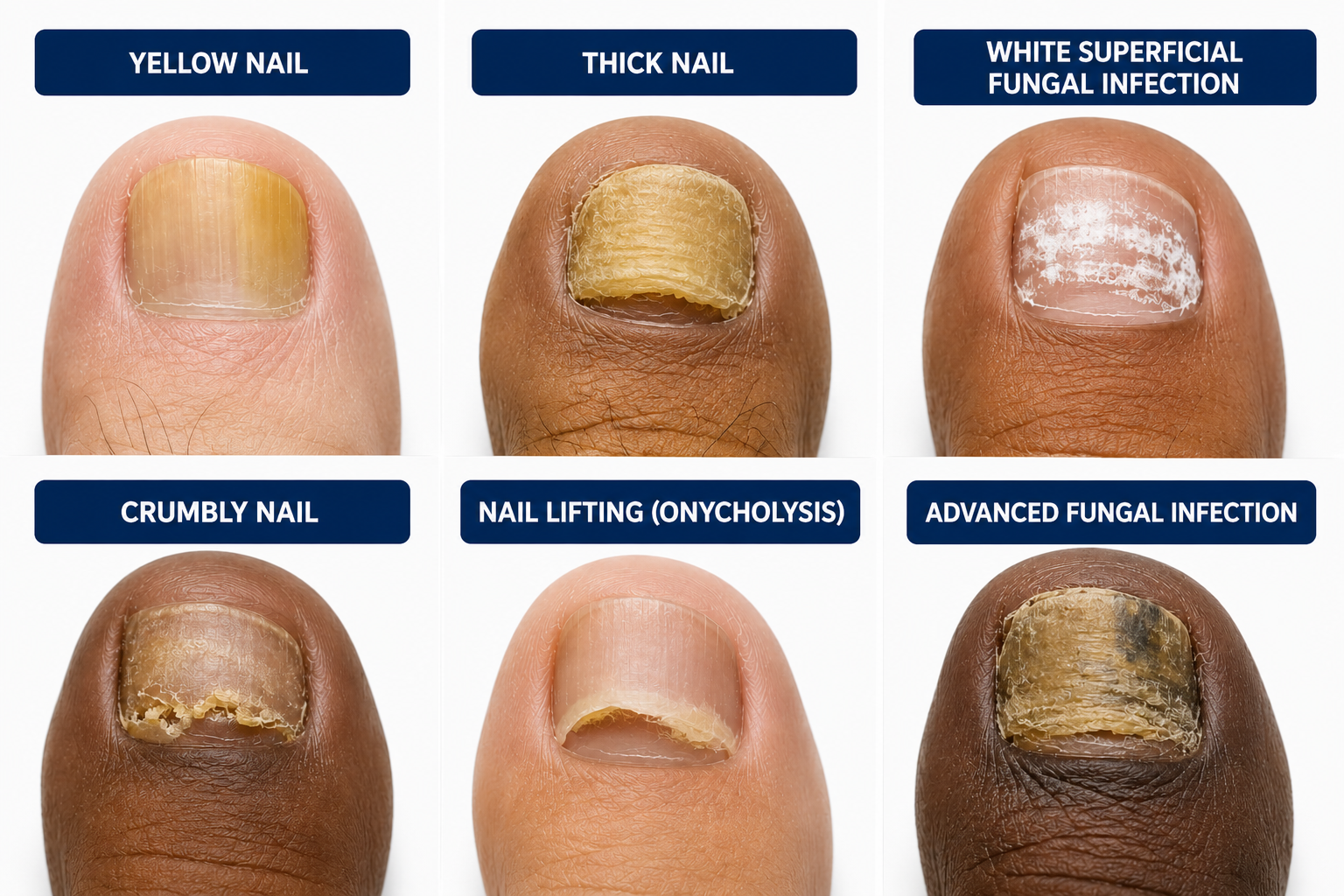
What does a fungal nail infection look like?
Fungal nail infections don't always look the same. In fact, the appearance can vary considerably depending on the type of fungus involved, how long the infection has been present and whether previous trauma has also damaged the nail.
Many infections begin as a small area of yellow, white or brown discolouration near the tip of the nail. At this stage, the nail often feels completely normal and many people assume the colour change will simply grow out. Unfortunately, fungal infections typically continue spreading deeper beneath the nail plate if left untreated.
As the infection progresses, the nail often becomes thicker and more brittle. Pieces of the nail may crumble away when trimmed, and a chalky or powdery material can sometimes be seen beneath the nail. Some nails become distorted or uneven, while others gradually separate from the underlying nail bed.
Not every fungal nail becomes thick. Some remain relatively thin but develop white patches across the surface, while others simply appear dull or cloudy compared with neighbouring nails.The most common signs include:
Yellow, white or brown discolouration
Thickened nails
Brittle or crumbly edges
Nails that are difficult to cut
Separation from the nail bed
Distorted nail shape
Debris beneath the nail
Discomfort when wearing enclosed footwear
Because several other nail conditions can produce similar changes, appearance alone isn't always enough to make a diagnosis.
Many infections begin as a small area of yellow, white or brown discolouration near the tip of the nail. At this stage, the nail often feels completely normal and many people assume the colour change will simply grow out. Unfortunately, fungal infections typically continue spreading deeper beneath the nail plate if left untreated.
As the infection progresses, the nail often becomes thicker and more brittle. Pieces of the nail may crumble away when trimmed, and a chalky or powdery material can sometimes be seen beneath the nail. Some nails become distorted or uneven, while others gradually separate from the underlying nail bed.
Not every fungal nail becomes thick. Some remain relatively thin but develop white patches across the surface, while others simply appear dull or cloudy compared with neighbouring nails.The most common signs include:
Yellow, white or brown discolouration
Thickened nails
Brittle or crumbly edges
Nails that are difficult to cut
Separation from the nail bed
Distorted nail shape
Debris beneath the nail
Discomfort when wearing enclosed footwear
Because several other nail conditions can produce similar changes, appearance alone isn't always enough to make a diagnosis.
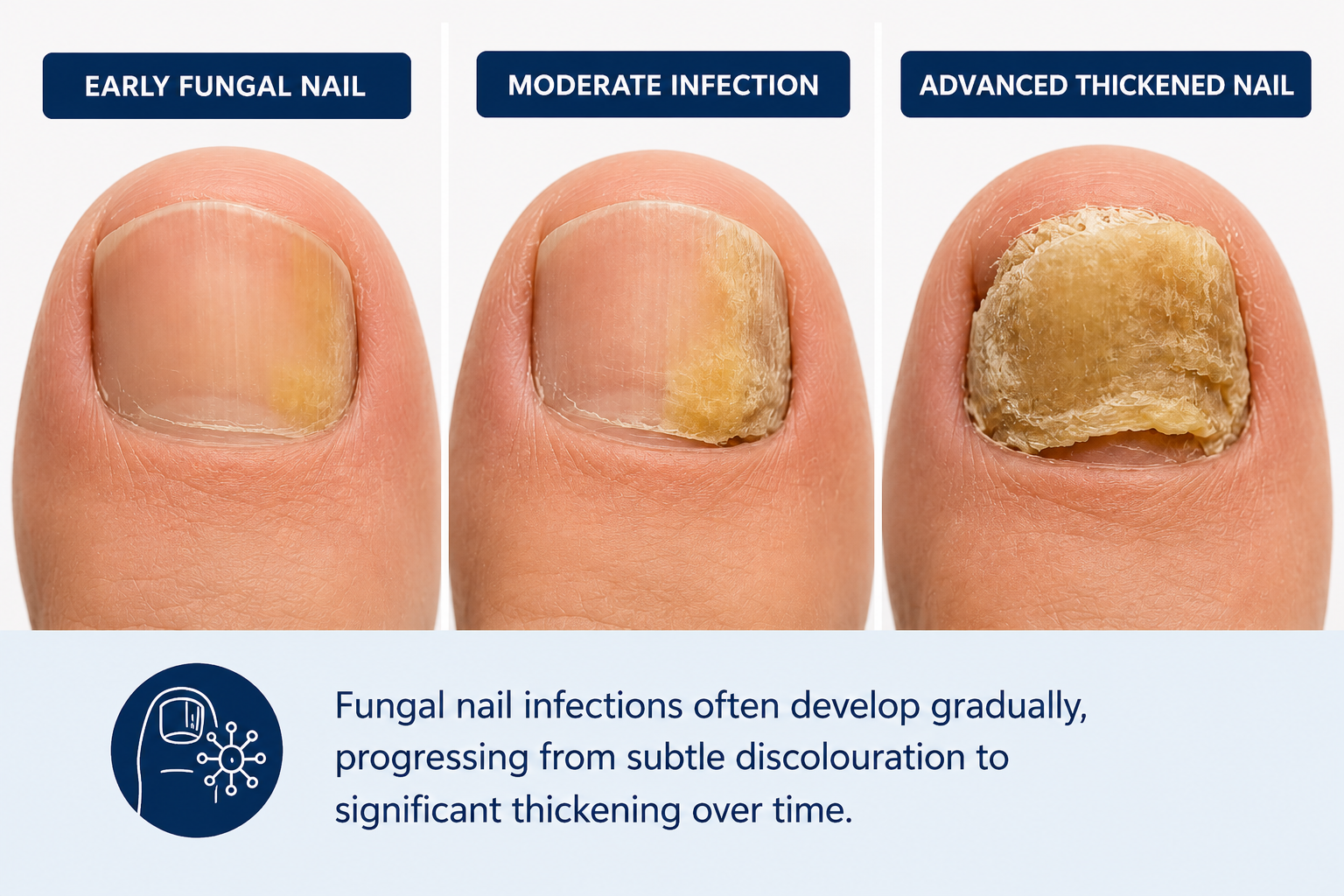
Is every thick or yellow nail caused by fungus?
One of the most common misconceptions we see is that every thickened or discoloured toenail must be fungal. In reality, several different conditions can closely resemble a fungal nail infection, which is why an accurate assessment is so important before starting treatment.
Repeated trauma is one of the most common alternatives. Running, football, hiking and footwear that places excessive pressure on the toes can all damage the nail over time. Following an injury, the nail may become thickened, ridged or discoloured even though no fungal infection is present.
Skin conditions such as psoriasis and eczema can also affect the nails, producing pitting, thickening and lifting that can look remarkably similar to fungal disease. Age-related nail thickening is another common cause, particularly in older adults, where slower nail growth naturally leads to denser nails.
Sometimes the problem isn't the nail itself but the way it grows. Curved nails, chronic pressure from bunions or hammer toes and long-term friction inside footwear can all alter the appearance of the nail without any fungal involvement.
Because treatment for these conditions differs significantly, starting antifungal therapy without confirming the diagnosis can result in months of unnecessary treatment with little improvement. During your assessment, we'll examine not only the affected nail but also the surrounding skin, your footwear, medical history and any previous injuries to determine the most likely cause.
When the diagnosis is uncertain, we may recommend laboratory testing before pursuing long-term treatment. This ensures that any treatment plan is based on the underlying cause rather than appearance alone.
Repeated trauma is one of the most common alternatives. Running, football, hiking and footwear that places excessive pressure on the toes can all damage the nail over time. Following an injury, the nail may become thickened, ridged or discoloured even though no fungal infection is present.
Skin conditions such as psoriasis and eczema can also affect the nails, producing pitting, thickening and lifting that can look remarkably similar to fungal disease. Age-related nail thickening is another common cause, particularly in older adults, where slower nail growth naturally leads to denser nails.
Sometimes the problem isn't the nail itself but the way it grows. Curved nails, chronic pressure from bunions or hammer toes and long-term friction inside footwear can all alter the appearance of the nail without any fungal involvement.
Because treatment for these conditions differs significantly, starting antifungal therapy without confirming the diagnosis can result in months of unnecessary treatment with little improvement. During your assessment, we'll examine not only the affected nail but also the surrounding skin, your footwear, medical history and any previous injuries to determine the most likely cause.
When the diagnosis is uncertain, we may recommend laboratory testing before pursuing long-term treatment. This ensures that any treatment plan is based on the underlying cause rather than appearance alone.
Not sure whether your nail is fungal?
Many nail conditions look similar. A professional assessment can help identify the underlying cause and ensure you're receiving the most appropriate treatment.
Why People Choose Toetal Health

Book Your Fungal Nail Assessment Today
Our friendly team can help advise on the best way to treat you.
Simply fill out our quick 1 minute pre-screening form and select a booking time that suits you. Call us on: (02) 9059 8296 or book an appointment below.