



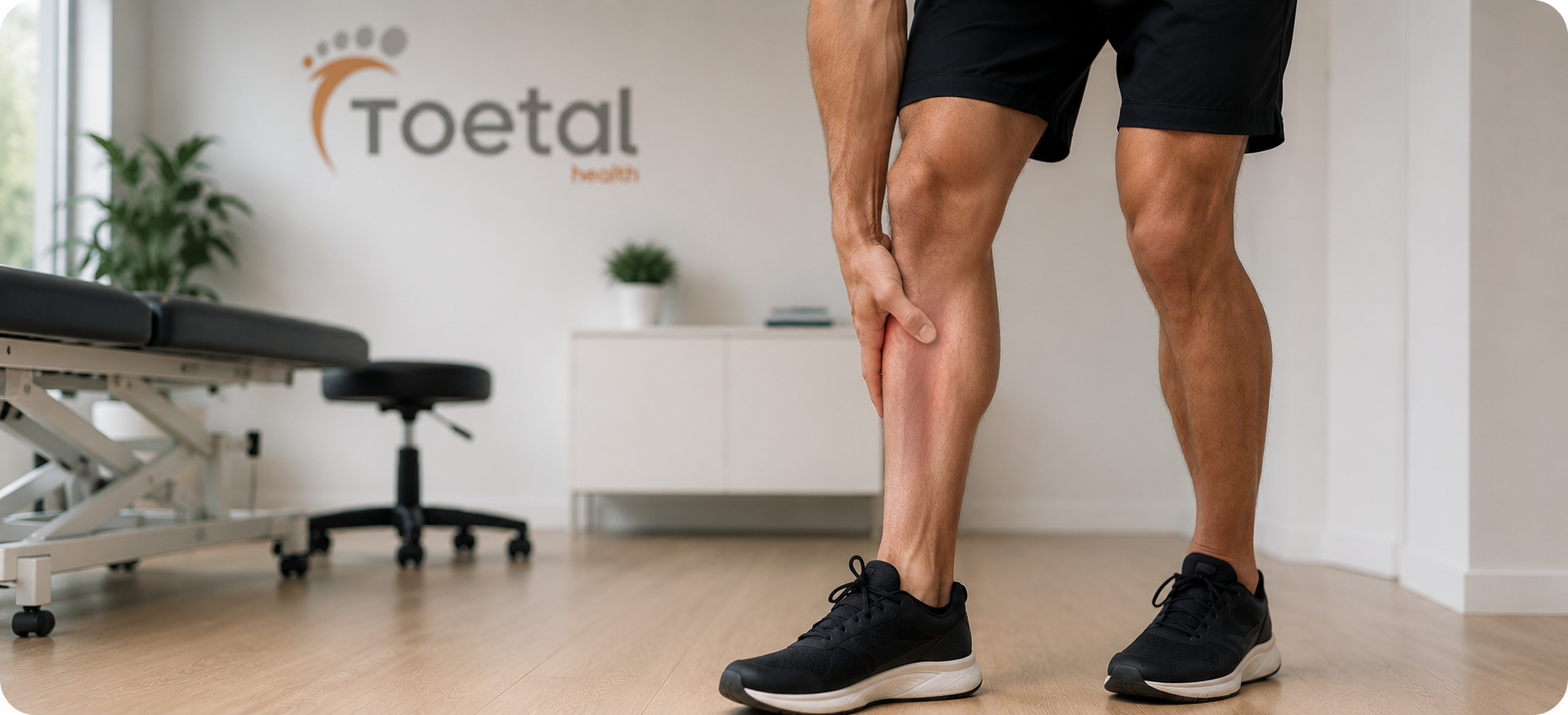
Pain along the shin can make walking, running and sport increasingly difficult. While many people assume all shin pain is simply "shin splints", several different conditions can cause discomfort along the front or inside of the lower leg.At Toetal Health, we perform a detailed assessment to identify the source of your symptoms before developing a personalised treatment plan designed to reduce pain and help you return to activity safely.
What Causes Shin Pain?
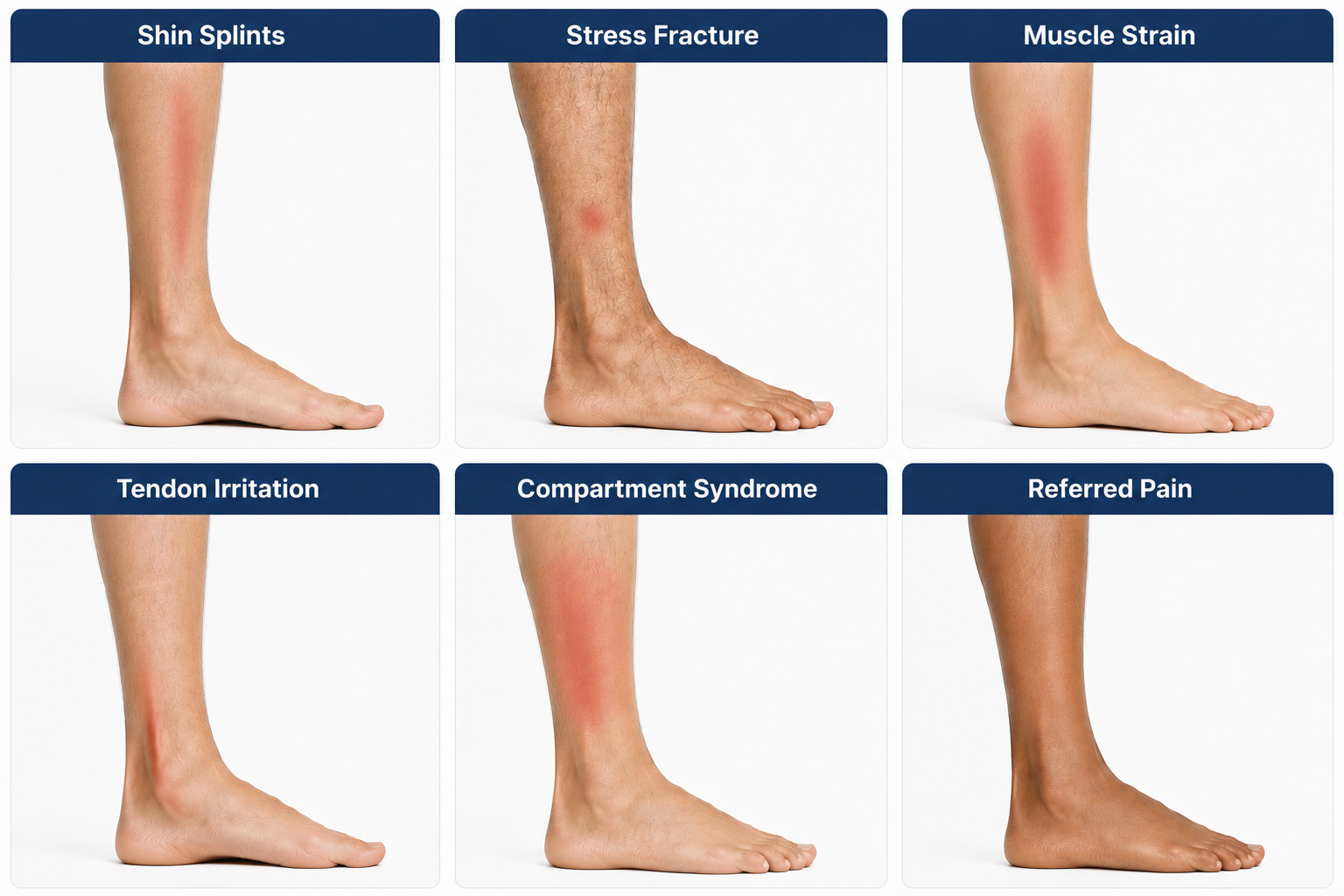
Shin pain is a symptom rather than a diagnosis. Several structures can become irritated or overloaded, including muscles, tendons, bone and surrounding connective tissues.
Common causes include:
Medial tibial stress syndrome (shin splints)
Bone stress injuries
Muscle overuse
Tendon irritation
Biomechanical abnormalities
Training errors
Footwear issues
Understanding which of these is responsible is essential for appropriate treatment.
Common causes include:
Medial tibial stress syndrome (shin splints)
Bone stress injuries
Muscle overuse
Tendon irritation
Biomechanical abnormalities
Training errors
Footwear issues
Understanding which of these is responsible is essential for appropriate treatment.
Common Symptoms
Symptoms vary depending on the underlying condition but may include:
Pain along the inside of the shin
Pain during or after running
Tenderness when pressing the shin
Pain when walking
Morning stiffness
Swelling
Pain that worsens with increased activity
Localised tenderness over bone
Tight calf muscles
Pain along the inside of the shin
Pain during or after running
Tenderness when pressing the shin
Pain when walking
Morning stiffness
Swelling
Pain that worsens with increased activity
Localised tenderness over bone
Tight calf muscles
Why Does Shin Pain Develop?
Several factors can increase stress through the lower leg.
These include:
Sudden increases in training
Running on harder surfaces
Worn footwear
Reduced calf strength
Flat feet or excessive pronation
Poor running mechanics
Limited ankle mobility
Previous lower limb injuries
Often several factors contribute simultaneously rather than one single cause.
These include:
Sudden increases in training
Running on harder surfaces
Worn footwear
Reduced calf strength
Flat feet or excessive pronation
Poor running mechanics
Limited ankle mobility
Previous lower limb injuries
Often several factors contribute simultaneously rather than one single cause.
Assessment
A thorough assessment helps determine why your symptoms developed.
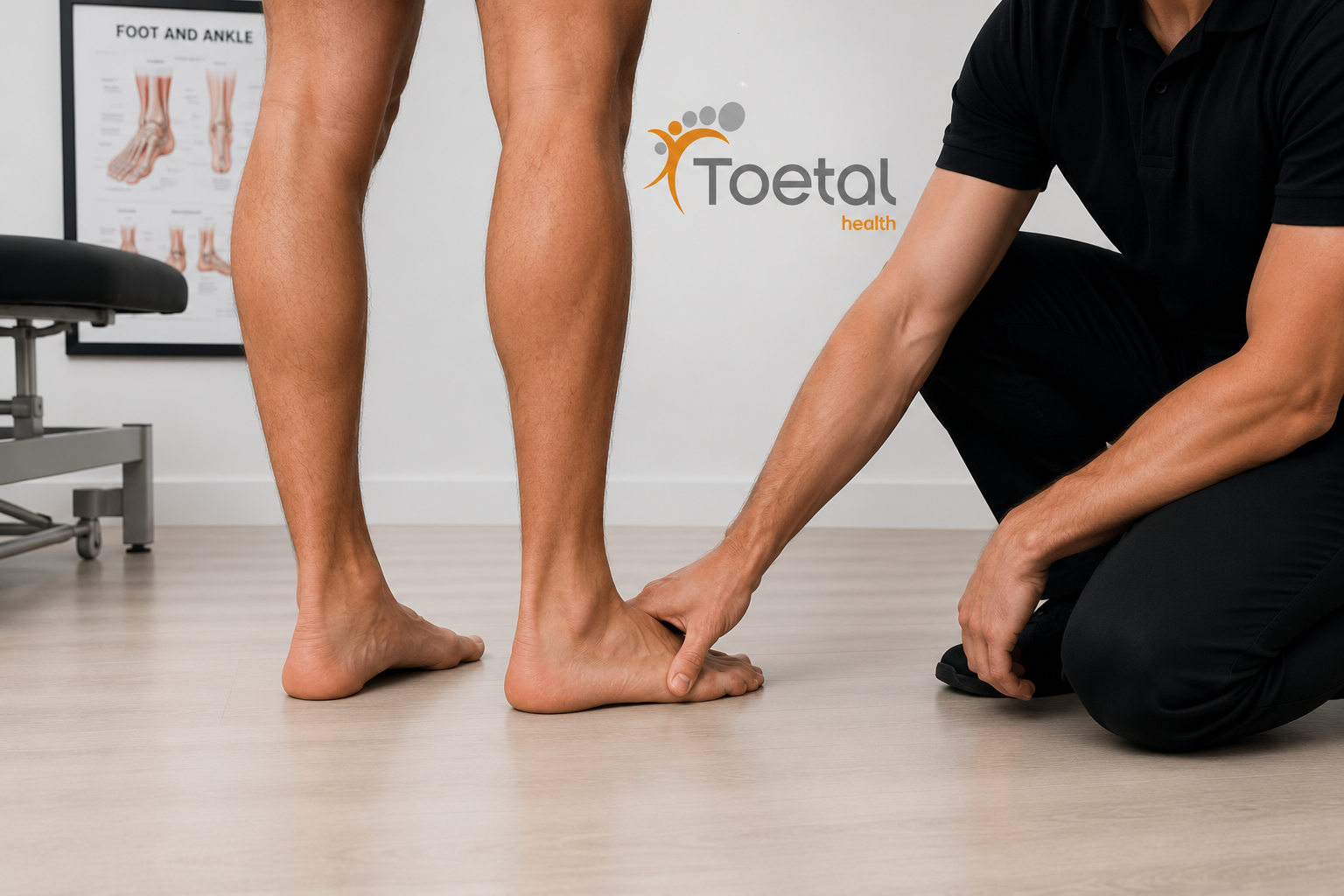
Your appointment may include:
Medical history
Walking assessment
Running assessment (where appropriate)
Foot posture assessment
Footwear assessment
Muscle strength testing
Joint mobility assessment
Palpation of painful structures
Referral for imaging if required
Your appointment may include:
Medical history
Walking assessment
Running assessment (where appropriate)
Foot posture assessment
Footwear assessment
Muscle strength testing
Joint mobility assessment
Palpation of painful structures
Referral for imaging if required
Treatment
Treatment depends entirely on the diagnosis and severity of your symptoms.
Management may include:
Activity modification
Strengthening exercises
Footwear advice
Running advice
Orthotics where appropriate
Shockwave therapy for selected tendon conditions
Mobility exercises
Progressive return-to-running programs
Most people improve well with conservative treatment once the underlying cause has been identified.
Management may include:
Activity modification
Strengthening exercises
Footwear advice
Running advice
Orthotics where appropriate
Shockwave therapy for selected tendon conditions
Mobility exercises
Progressive return-to-running programs
Most people improve well with conservative treatment once the underlying cause has been identified.
When Should You Seek Assessment?
Arrange an assessment if:
Pain has persisted for more than two weeks
Walking becomes uncomfortable
Running consistently reproduces symptoms
Pain is becoming more localised
You notice swelling
Rest is no longer improving symptoms
Persistent shin pain should not simply be "run through", particularly if a bone stress injury is suspected.
Pain has persisted for more than two weeks
Walking becomes uncomfortable
Running consistently reproduces symptoms
Pain is becoming more localised
You notice swelling
Rest is no longer improving symptoms
Persistent shin pain should not simply be "run through", particularly if a bone stress injury is suspected.
Why Choose Toetal Health?
Rather than simply treating the painful area, we identify why your shin pain developed.
By assessing your biomechanics, training habits, footwear and lower limb function, we can create an evidence-informed treatment plan tailored to your goals—whether you're returning to recreational walking or competitive sport.
By assessing your biomechanics, training habits, footwear and lower limb function, we can create an evidence-informed treatment plan tailored to your goals—whether you're returning to recreational walking or competitive sport.
Frequently Asked Questions
Is shin pain always shin splints?
No. Shin pain can arise from muscles, tendons, bone, joints or surrounding tissues. A proper assessment helps determine the underlying cause.
Can flat feet cause shin pain?
In some people, excessive foot pronation can increase loading through muscles and tissues along the inside of the shin. However, flat feet are only one of many contributing factors.
Do I need an X-ray?
Not always. Many causes of shin pain can be diagnosed clinically. If a stress fracture or other significant injury is suspected, additional imaging may be recommended.
Will orthotics help?
Orthotics may benefit some people where abnormal foot mechanics contribute to repeated overloading. They are not required for everyone.
Can I continue exercising?
Recovery varies depending on symptom duration, tendon health and activity levels. Many people improve over several months with an appropriate rehabilitation program.
Why People Choose Toetal Health

Book Your Shin Pain Assessment Today
If shin pain is stopping you from running, training or staying active, we can help identify what’s causing it and what needs to change. We’ll assess your lower limb mechanics, strength, mobility, training load and footwear to determine the likely source of your symptoms and develop a treatment plan aimed at getting you moving comfortably again. Call us on: (02) 9059 8296 or book an appointment below.
Book an Appointment