



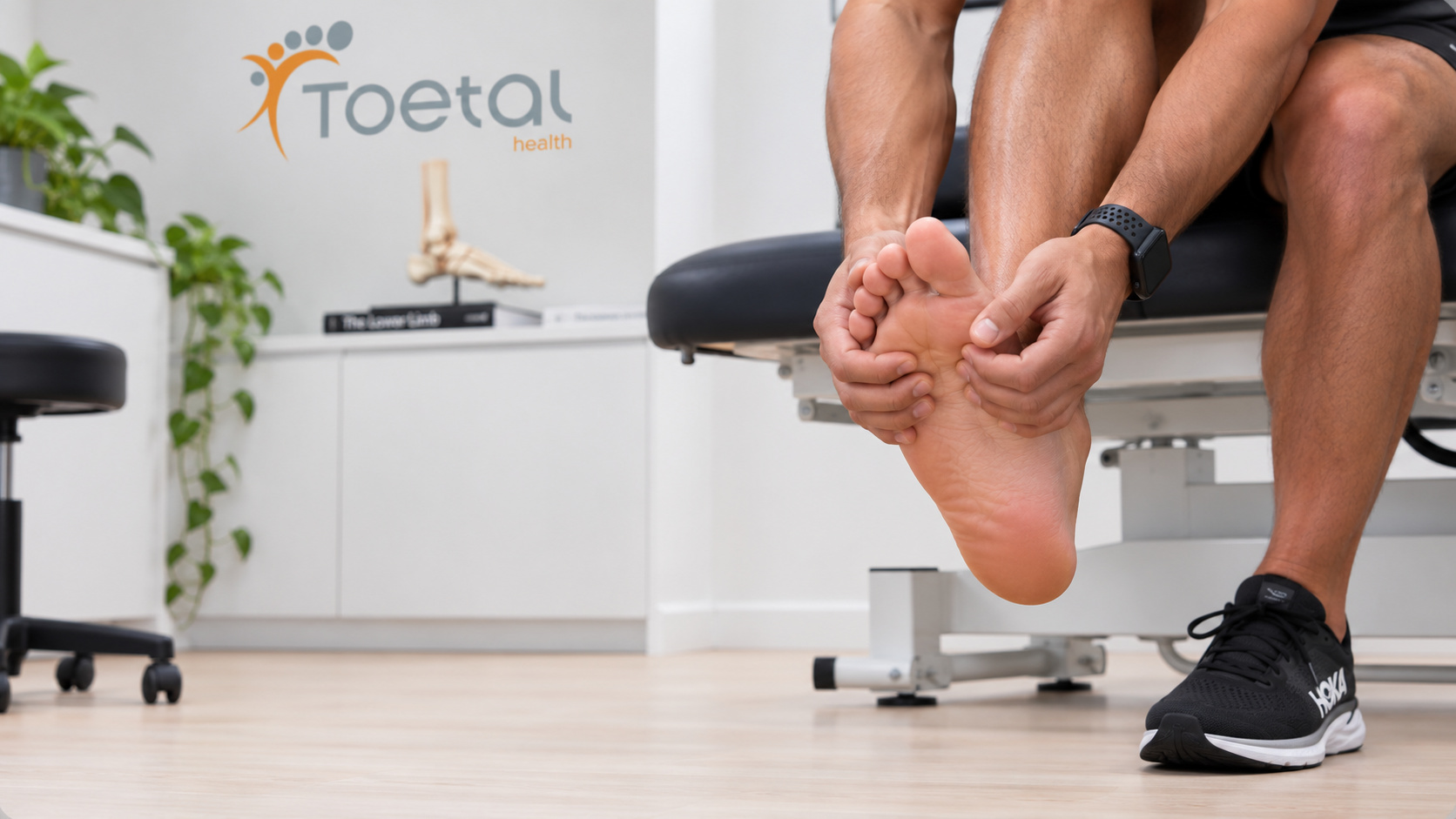
Forefoot pain is a common problem that can make walking, running and even wearing shoes uncomfortable. Symptoms may occur underneath the ball of the foot, between the toes or around the toe joints.
At Toetal Health Podiatry in Randwick, we assess the painful area as well as the factors that may be contributing to increased pressure or irritation through the forefoot.
At Toetal Health Podiatry in Randwick, we assess the painful area as well as the factors that may be contributing to increased pressure or irritation through the forefoot.
Where Is Your Forefoot Pain Coming From?
“Forefoot pain” describes a symptom rather than a specific diagnosis. Different structures in the front of the foot can produce very similar symptoms, so identifying the source of the pain is an important part of treatment.
Common causes include:
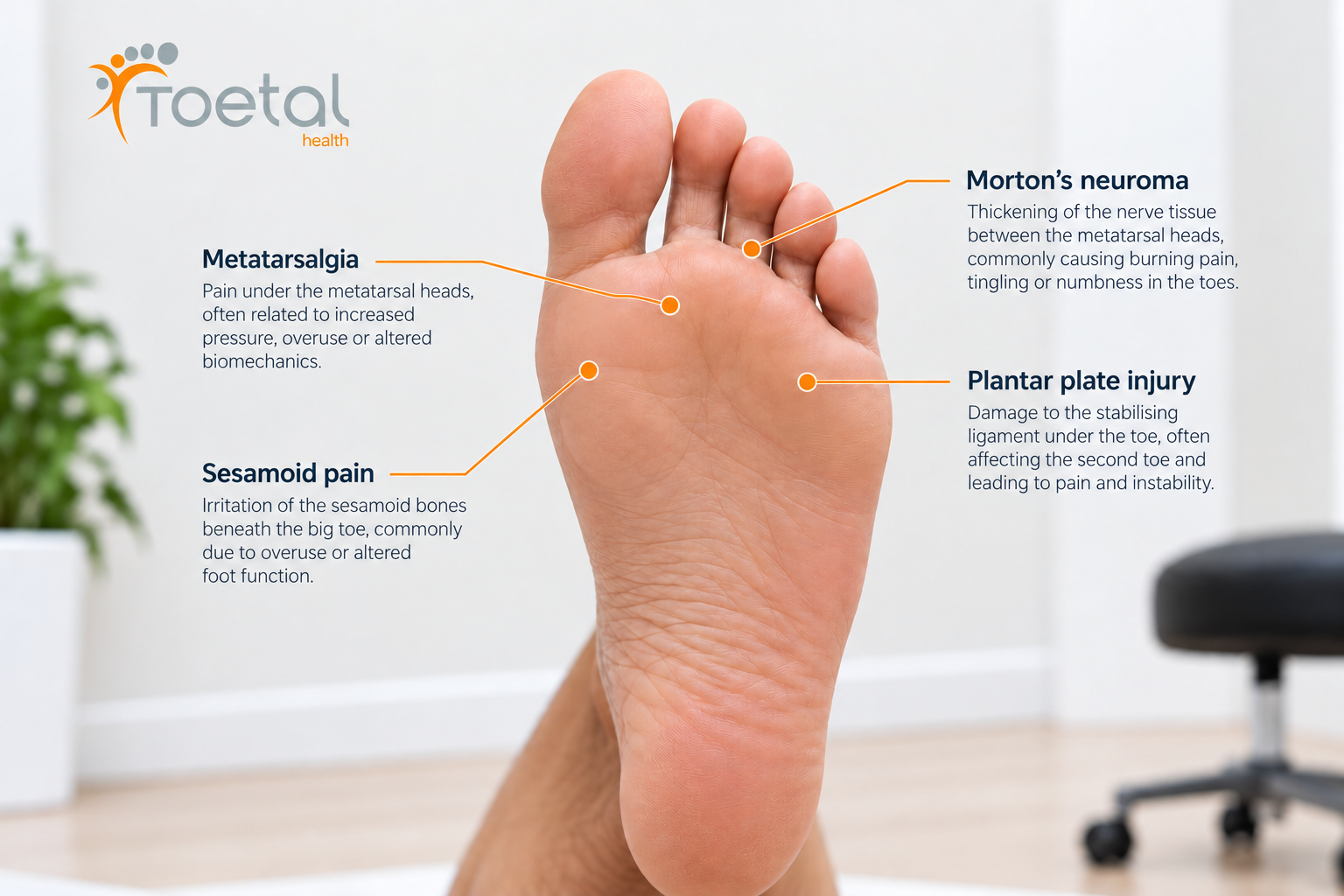
Metatarsalgia
Pain and irritation beneath the metatarsal heads, often associated with increased pressure through the ball of the foot.
Morton’s Neuroma
Irritation of a nerve between the toes that may cause burning, tingling, numbness or the sensation of something being underneath the foot.
Plantar Plate Injury
Irritation or injury to the supporting structure beneath the toe joint, commonly affecting the second toe.
Sesamoid Pain
Pain underneath the big toe joint involving the small sesamoid bones and surrounding tissues.
Joint Pain or Arthritis
The joints of the forefoot can become painful or stiff due to injury, degeneration or repeated loading.
Corns and Calluses
Areas of increased pressure can cause thickened skin that becomes painful when walking or wearing shoes.
Common causes include:
Metatarsalgia
Pain and irritation beneath the metatarsal heads, often associated with increased pressure through the ball of the foot.
Morton’s Neuroma
Irritation of a nerve between the toes that may cause burning, tingling, numbness or the sensation of something being underneath the foot.
Plantar Plate Injury
Irritation or injury to the supporting structure beneath the toe joint, commonly affecting the second toe.
Sesamoid Pain
Pain underneath the big toe joint involving the small sesamoid bones and surrounding tissues.
Joint Pain or Arthritis
The joints of the forefoot can become painful or stiff due to injury, degeneration or repeated loading.
Corns and Calluses
Areas of increased pressure can cause thickened skin that becomes painful when walking or wearing shoes.
What Can Contribute to Forefoot Pain?
Forefoot pain is often influenced by how pressure is distributed across the foot.
Contributing factors can include footwear, activity or training load, foot shape, limited ankle or big toe mobility, altered foot mechanics and reduced capacity of the muscles and tissues supporting the forefoot.
Rather than assuming the painful area is the problem itself, we assess why that particular area may be experiencing excessive load.
Contributing factors can include footwear, activity or training load, foot shape, limited ankle or big toe mobility, altered foot mechanics and reduced capacity of the muscles and tissues supporting the forefoot.
Rather than assuming the painful area is the problem itself, we assess why that particular area may be experiencing excessive load.
Forefoot Pain Assessment
Your assessment may include:
Location and behaviour of your symptoms
Foot posture and biomechanics
Walking or running assessment where appropriate
Joint mobility
Muscle strength
Footwear assessment
Palpation and clinical testing of the painful structures
Referral for imaging where required
This is particularly important because conditions such as a plantar plate injury, Morton’s neuroma and metatarsal stress injury can initially present with similar symptoms.
Location and behaviour of your symptoms
Foot posture and biomechanics
Walking or running assessment where appropriate
Joint mobility
Muscle strength
Footwear assessment
Palpation and clinical testing of the painful structures
Referral for imaging where required
This is particularly important because conditions such as a plantar plate injury, Morton’s neuroma and metatarsal stress injury can initially present with similar symptoms.
Treatment
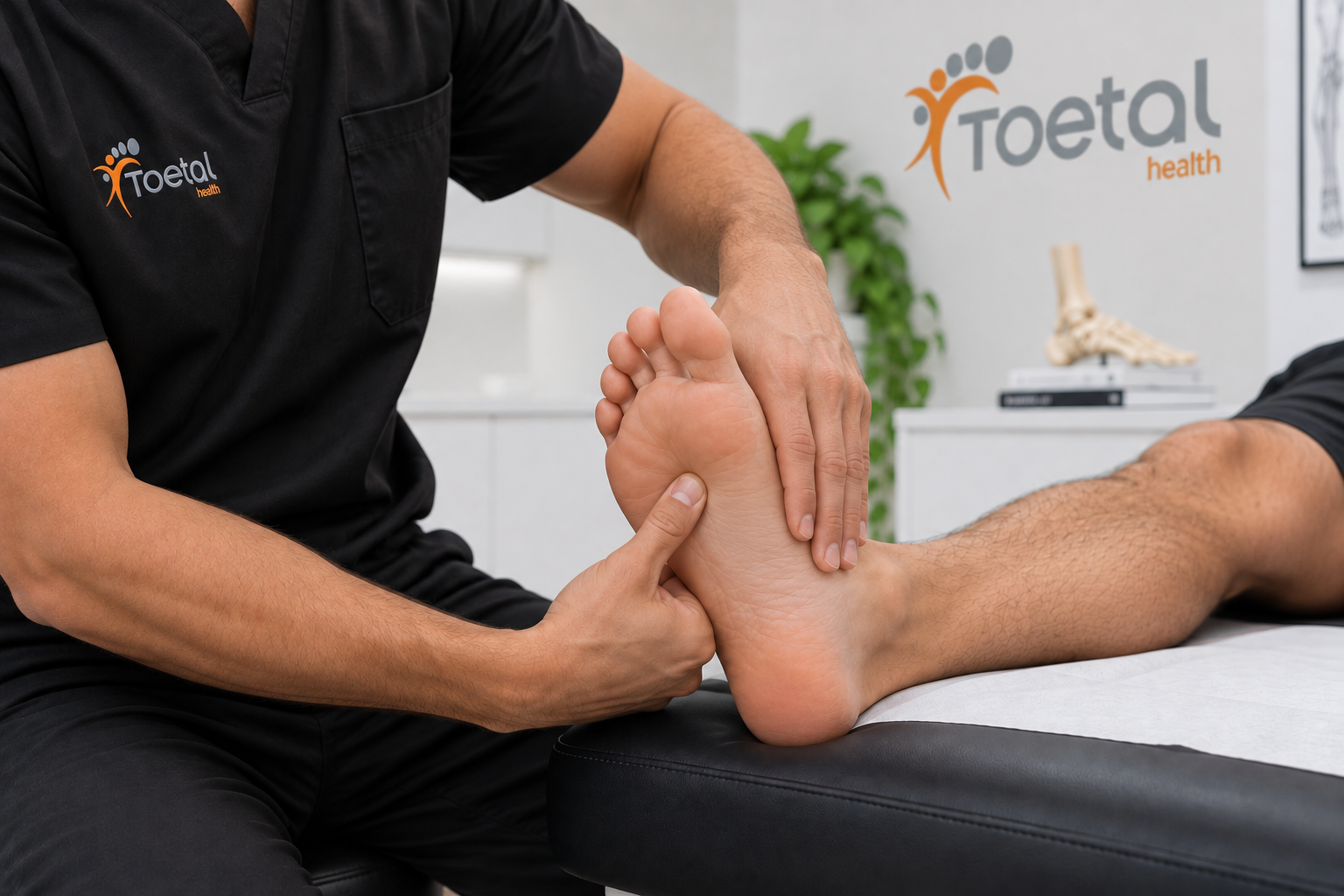
Treatment depends on the underlying cause of your forefoot pain.
Management may include activity modification, footwear changes, pressure redistribution, padding or offloading, strengthening and mobility exercises, orthotics where appropriate and treatment directed toward the affected tissue.
Our aim is not simply to reduce pain temporarily, but to address the factors contributing to repeated overload of the forefoot.
Management may include activity modification, footwear changes, pressure redistribution, padding or offloading, strengthening and mobility exercises, orthotics where appropriate and treatment directed toward the affected tissue.
Our aim is not simply to reduce pain temporarily, but to address the factors contributing to repeated overload of the forefoot.
Why Choose Toetal Health?
Rather than treating all pain in the ball of the foot as “metatarsalgia”, we work to identify which structure is painful and why it is being overloaded.
By assessing your foot mechanics, footwear, activity and lower limb function, we can develop a treatment plan specific to the cause of your symptoms.
By assessing your foot mechanics, footwear, activity and lower limb function, we can develop a treatment plan specific to the cause of your symptoms.
Frequently Asked Questions
Why does the ball of my foot hurt when I walk?
Pain beneath the ball of the foot can come from several structures, including the metatarsal joints, plantar plate, nerves, sesamoids and surrounding soft tissues. An assessment can help determine which structure is responsible.
Is forefoot pain the same as metatarsalgia?
Not necessarily. Metatarsalgia is commonly used to describe pain beneath the metatarsal heads, but forefoot pain can have many different causes.
Can tight shoes cause forefoot pain?
Yes. Narrow or poorly fitting footwear can increase pressure around the toes and forefoot and may aggravate some conditions.
Will orthotics help forefoot pain?
They can help in some cases by changing how pressure is distributed through the foot, but they are not necessary for everyone. Treatment should depend on the cause of the pain.
Do I need an X-ray or ultrasound?
Not always. Many forefoot conditions can initially be assessed clinically. Imaging may be recommended when we need more information about a suspected injury or diagnosis.
Why People Choose Toetal Health

Book Your Forefoot Pain Assessment Today
If pain in the ball of your foot or around your toes is making walking, exercise or footwear uncomfortable, we can help determine what is causing it. We’ll assess the painful structures, your foot mechanics, mobility, footwear and activity demands and develop a treatment plan based on what we find.
Call us on: (02) 9059 8296 or book an appointment below.
Recent Articles
Coming soon